Blindspot
Interviews

Buyer insights that go beyond your pipeline

Learn More

LIVE WORKSHOP | MARCH 24 @ 9AM PST

Blindspot Interviews

Buyer insights that go beyond your pipeline

Learn More

AI in Competitive Intelligence Report — 2026

AI in Competitive Intelligence Report — 2026

Are You Building
Brainless?

CI teams are building with AI faster than ever. But fast and accurate aren’t the same thing. We surveyed 250+ CI and PMM professionals
to find out what’s working, what’s breaking, and what separates the builds that teams actually trust.

97%

of CI teams actively building or planning AI workflows

76%

have had an AI output they couldn’t stand behind

79%

don’t trust AI outputs to go directly to their sellers

97%

of CI teams actively building or planning AI workflows

76%

have had an AI output they couldn’t stand behind

79%

don’t trust AI outputs to go directly to their sellers

zombieagentleft.png
zombieagentright.png

In This Report

Chapter 1

The build movement is real,
and it’s accelerating

Everyone’s building. And the use cases are wide. For most teams, AI finally makes all of it feel within reach. The reasons people are moving are just as varied: replacing manual processes, responding to leadership pressure, and some are just ahead of it. But when we asked how it’s actually going, the outputs aren’t matching the ambition.

97%

of CI teams actively building or planning AI workflows

50%

are doing so to replace slow manual processes that didn’t scale

43%

say that their AI system isn’t increasing outputs

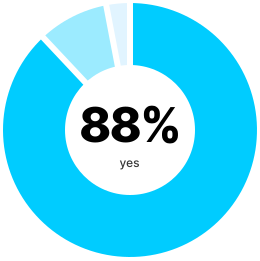
Does your team use AI workflows or agents for CI?

doesyourteam-pie.svg
skysquare.svg

88%

Yes — we have active AI workflows or agents for CI

skymediumsquare.svg

9%

No, but we’re planning to in the next 6 months

skylightsquare.svg

3%

No, and we’re not planning to

What’s the primary driver behind the push to build AI workflows?

50%

Replacing slow, manual CI processes that weren’t scaling

#1 RESPONSE

27%

Proactive — not in response to pressure

24%

Headcount pressure — do more with less

18%

Leadership mandated an AI-first approach

10%

Competitive urgency — felt behind other teams

What outcomes are you using AI to drive for your CI program?

Summarizing competitor activity and moves

83%

Generating Battlecard content

83%

Refining competitive positioning

78%

Win/loss analysis

60%

Identifying emerging threats and tiering competitors

60%

Answering rep questions about competitors in real time

58%

Understanding competitor strategy in live deals

36%

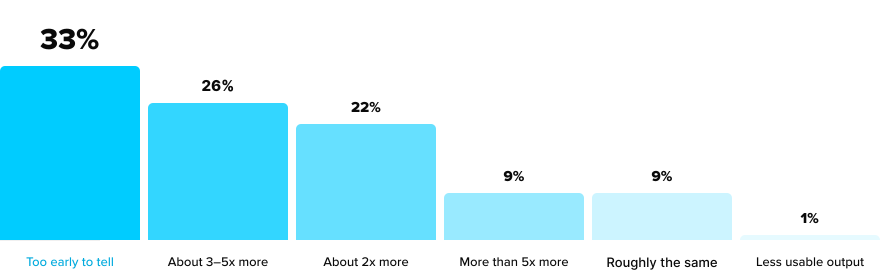
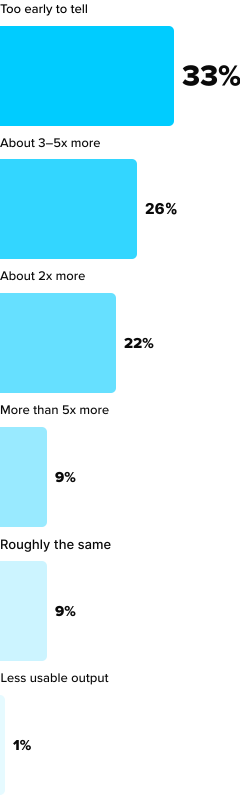
How has the AI changed your output volume?

how-has-ai-changes-output-barchart.svg
aioutputchartmobile.svg

Chapter 02

Your agent is only as smart
as what it’s built on.

The builds are moving fast. The foundation underneath them, less so. Most systems have no way to weight one source over another, no signal for how stale the data is, and no mechanism for human judgment to shape what the agent knows. The output arrives confident regardless.

The Intelligence Layer

Most builds are pulling from sources that are unweighted, unstructured, and quietly going stale. The agent doesn’t know what it doesn’t know.

87%

rely on static data sources to power their AI workflows

81%

don’t know how fresh or recent their data is

12%

are systematically weighting different data sources

Do you weight your data sources or treat them equally?

47%

All sources are treated equally – no weighting

#1 RESPONSE

23%

We weight sources manually but it’s not built into the system

19%

Not sure

12%

Source weighting is automatically built into our workflow

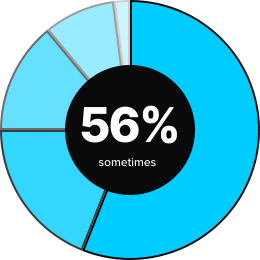
Can you tell how recent the underlying data is?

recentunderlyingpie.svg
skysquare.svg

56%

Sometimes – for some sources but not others

skysquare.svg

19%

Yes, always – there’s a clear freshness or date stamp

skysquare.svg

14%

Rarely – we mostly can’t tell

skysquare.svg

9%

Not sure

skysquare.svg

2%

Never – there’s no way to check recency

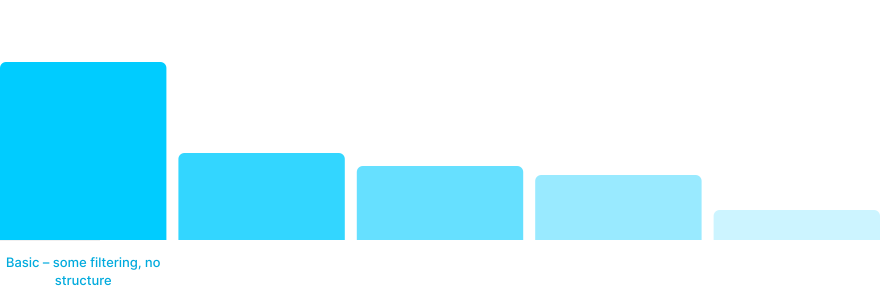
How is competitive data processed before your agent uses it?

compdataprocgraph.svg
dataprocesschartmobile.svg

What data sources are connected to your Al system?

Uploaded documents – battlecards, reports, PDFs

83%

Internal wiki or knowledge base – Notion, Confluence, etc. (live sync)

79%

Exported call transcripts or win/loss interview files (static)

56%

Sales call recordings – Gong, Chorus, or similar (live sync)

51%

News and market data feeds

48%

G2, Gartner, or peer review sites

47%

Google Drive or SharePoint (live sync)

46%

CRM – Salesforce, HubSpot, or similar (live sync)

43%

Internal wiki or knowledge base — Notion, Confluence, etc. (live sync)

43%

Slack or internal messaging channels (live sync)

33%

Linkedln or social media

31%

Win-loss interviews – (live sync)

20%

Job postings

15%

“We have scenarios where AI will overweight recent news or mentions on social or news sources at the detriment of the more hard trends.

Director, Product Marketing, Fintech

“We’re already climbing out of a hole of outdated info. And so while there is a lot of excitement about the speed and specificity which we can generate answers and content now, as soon as it gets things wrong there’s an erosion of trust.

Director Product & Solutions Marketing, SaaS

The Context Layer

Even teams with decent data sources are missing the layer that makes outputs actually usable — human context. Someone who knows your ICP, your positioning, your active deals. Someone whose corrections the system can learn from. Without it, every query starts from zero.

82%

Don’t have a process where human expertise automatically corrects and improves their system

51%

Have their ICP and positioning in their system

36%

Actively steer which sources the system prioritizes

Is your ICP, positioning, and differentiation built in?

51%

Yes – it’s explicitly built into the system and shapes every output

#1 RESPONSE

43%

Partially – some context is there but it’s not comprehensive or consistent

4%

No – outputs are generic by default

1%

Not sure

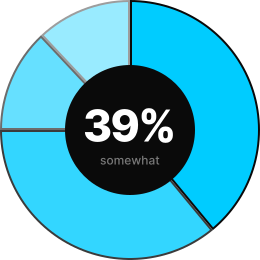
Can your team steer which sources the system prioritizes?

teamsteerpie.svg
skysquare.svg

39%

Somewhat – limited ability to influence but not full control

skysquare.svg

36%

Yes – we can actively steer which sources the system prioritizes

skysquare.svg

13%

No – we can’t control source prioritization

skysquare.svg

11%

Not sure

Do corrections feed into the system?

We haven’t found a systematic way to handle this

37%

Yes – but we have to manually update the underlying data each time

31%

Yes – corrections automatically improve future outputs

18%

Yes – corrections automatically improve future outputs

9%

Not sure

4%

“We feel stuck between the notion of needing AI generated battle cards because of how fast the market is changing day to day and static resources can’t keep up. But the information is not always reliable or has the right spin before reps access. And sometimes bad data feeds in and we can’t tell from where.

Product Marketing Expert, SaaS

“The hallucinations about a competitors product in comparison to ours was vastly incorrect. While it is a useful solution, the outputs need SME human in the loop review if it is critical to a deal.

Sr. Product Marketing Manager, SaaS

No-intelligence-layer.-No-context-layer.-No-brain.svg

Chapter 3

The outputs are running.
But are they right?

This is what a build without both layers looks like in the wild. No intelligence layer means the data is unprocessed, unweighted, and decaying. No context layer means there’s no human judgment shaping what the system knows. What’s left is an agent that retrieves fast and confidently, with no brain to back it up.

76%

Have had an AI CI output they couldn’t stand behind.

79%

Don’t trust outputs going straight to sellers. Only 2% fully trust them with no review.

53%

Have a manual review process baked in before anything reaches sellers. This kills the scale AI promised.

When AI let you down, what was the problem?

The answer sounded confident but sources were weak or unverifiable

73%

The answer was too generic – not relevant to the specific deal or segment

60%

It couldn’t distinguish between a real competitive threat and a passing mention

36%

The information was outdated by the time we used it

28%

Two outputs on the same topic contradicted each other

20%

We had no way to tell if it was right or wrong until it was too late

17%

A rep used it in a deal and it backfired

2%

How do you verify before sharing with sellers?

53%

We have a manual review process before anything goes to sellers

#1 RESPONSE

26%

We spot check occasionally but not systematically

12%

It depends on the use case

6%

We don’t – we share outputs directly

2%

We’ve built our own validation layer into the workflow

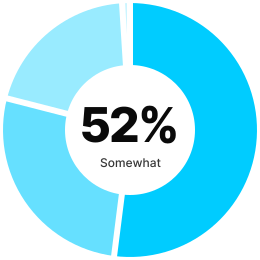
How much do you trust outputs to go directly to sellers?

trustoutputpie.svg
skysquare.svg

52%

Somewhat – we always review before it reaches sellers

skysquare.svg

27%

Not at all – significant validation required before sharing

skysquare.svg

20%

Mostly – we review occasionally but largely trust the output

skysquare.svg

2%

Fully – we publish directly to sellers with no review

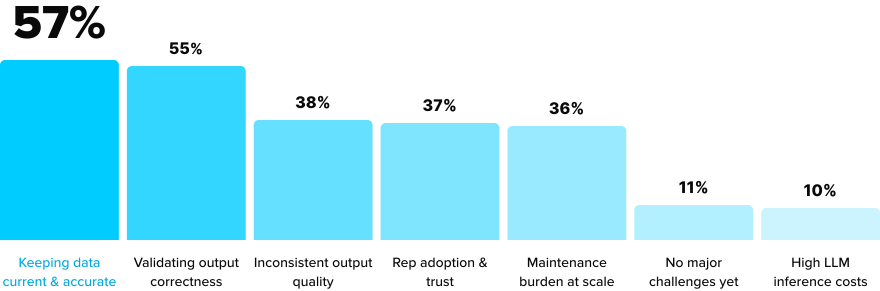
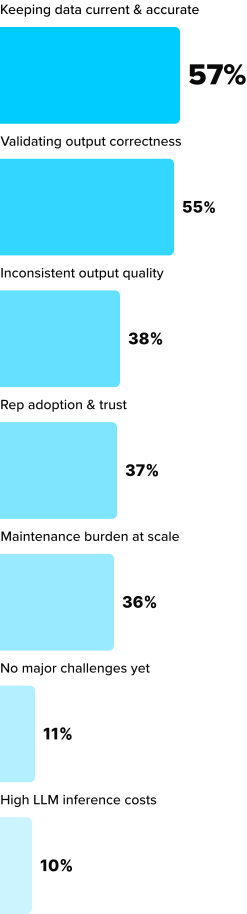
What have been your biggest build challenges?

biggestbuildchart.svg
biggest-build-chart-mobileb.svg

“In one $1M+ deal, a rep used AI generated positioning. It was generic with made up proof, not tailored to the buyer concerns. The buyer pushed back, and the rep lost confidence in the moment.

Director Product and Solutions Marketing, AI and Automation, SaaS

“It has certainly hurt rep’s trust in our CI outputs (as well as overall credibility). We are under a lot of pressure to scale our outputs without much in the way of additional resources.

Director, Product Marketing, Solutions, SaaS

Chapter 04

The brain your builds are missing
has two parts.

AI workflows that have a structured intelligence layer:

2.5×

More likely to trust their outputs going to sellers

5.7×

Less likely to struggle with inconsistent output quality

0%

Reported outdated data failing their workflows

AI workflows that have a structured context layer:

2.9×

Less likely to report any major challenges with their AI workflows

3.6×

More likely to have ICP and
positioning reflected in
outputs

20%

Reported 3x+ their output volume

What would it take to fully trust Al-generated CI?

Verifiable, sourced outputs I can trace back to original content

89%

A system that learns from corrections over time

76%

Structured, continuously refreshed competitive data

69%

Human oversight actively shaping what the system knows and outputs

61%

Consistent answers across similar queries

60%

Proof that similar teams have trusted and adopted it

37%

Give your builds a brain.

Klue’s intelligence and context layer is the
foundation your CI agents are missing.

footerzombiezzzz.png

Want to see Klue in action?

Let’s do it. Tell us a bit about yourself and we’ll set up a time to wow you.

Klue-Logo-white.svg
Social-Instagram Logo
Social-LinkedIn Logo
Social-Twitter Logo

Status Media Kit Privacy | © 2025 Klue Labs Vancouver, BC