




“Our battlecards are solid.”
Product marketing teams say this all the time. But when you ask sellers if they actually use them mid-deal, the answer is usually silence or a polite deflection.
The problem isn’t the content. It’s the model. Static battlecards decay the moment they’re published, and sellers know it. Automated battlecards fix this by connecting to live data sources and delivering competitive intel based on the deal in front of the rep, not the competitor deck from last quarter. Here’s how they work and how to build them for your team.
Why static battlecards fail your sales team
“We have battlecards.”
A common refrain from product marketing teams. And it sounds good, right?
But here’s the thing: having battlecards and having battlecards that sellers actually use are two different problems. Automated battlecards are AI-powered sales enablement documents that automatically aggregate, analyze, and update competitive intelligence. Unlike static PDFs, automated battlecards connect to live data sources like your CRM, call recordings, and external intel feeds to deliver relevant content directly into seller workflows.
The traditional approach looks something like this: PMM spends two weeks building a competitor deck, shares it in Slack, and moves on. Meanwhile, that competitor changes their pricing, launches a new feature, or shifts their messaging entirely. Your sellers don’t know. They’re still quoting last quarter’s positioning.
Static battlecards fail for three predictable reasons:
- Outdated by publication: Competitor pricing and messaging changes faster than quarterly refresh cycles allow
- Disconnected from deals: Generic “Competitor A” content doesn’t address the specific situation in the current opportunity
- Buried in folders: With revenue teams spending 440 hours per year searching for content, sellers won’t dig through a SharePoint drive during a live call or while prepping for a demo
The result? Reps either wing it or skip competitive positioning altogether — a costly gap given that enablement drives a 49% win rate on forecasted deals compared to 42.5% without.
What are automated battlecards
Automated battlecards are competitive sales assets that update themselves using AI and connected data sources, then deliver relevant content to sellers based on the deal they’re working.
The “automated” part refers to two distinct capabilities. First, the content itself refreshes continuously as new competitive intelligence flows in. Second, the delivery happens automatically based on deal signals rather than requiring sellers to go hunting for information.
Think of it as the difference between a static map and GPS navigation. One shows you where things were when it was printed. The other tells you where to turn right now, based on where you’re actually going.
Static vs. automated battlecards
The distinction matters because it changes who does the work and when.
| Dimension | Static battlecards | Automated battlecards |
|---|---|---|
| Update frequency | Quarterly or ad-hoc | Continuous, real-time |
| Data sources | Manual research | CRM, call recordings, external intel |
| Delivery | Stored in repository | Pushed to seller workflows |
| Relevance | Generic per competitor | Deal-specific |
| Maintenance effort | High (PMM-dependent) | Low (AI-assisted) |
With static battlecards, PMM owns the entire lifecycle. Research, writing, formatting, distribution, and updates all fall on the same team. That works when you’re covering three competitors. It breaks down at ten, especially since most CI teams have five or fewer people.
Automated battlecards shift the burden from creation to curation. The system handles the gathering and refreshing. PMM focuses on positioning and quality control.
What makes an automated battlecard effective
Not all automation is equal. A battlecard that updates itself with irrelevant information is just as useless as one that never updates at all. Effective automated battlecards share four characteristics.
Deal-specific context
The battlecard content reflects the actual competitor in the deal and the buyer’s situation. If your seller is going up against Salesforce in a mid-market opportunity, they don’t want the enterprise-focused talking points.
Generic “Competitor A” cards force sellers to do translation work mid-conversation. That’s exactly when you lose them.
Actionable competitive positioning
Sellers don’t want facts about competitors. They want guidance on how to position against them.
Clear differentiation statements, specific talk tracks, and direct answers to “why choose you over them?” are what matter. Facts without framing are just trivia.
Verified proof points and quotes
Real customer quotes and win stories add credibility that internal positioning can’t match. The most trusted source? Buyer feedback from win-loss interviews.
When a seller can say “here’s what a customer in your industry told us about switching from Competitor X,” that lands differently than “we believe we’re better because…”
Objection handling plays
Every competitor has a playbook against you. Your sellers encounter the same objections repeatedly.
Effective battlecards anticipate what the competitor will say and arm sellers with responses. The FIA framework works well here: acknowledge the Fact, explain the Impact, and provide the Action.
How AI powers automated battlecards
The technology behind automation isn’t magic. It’s a combination of data ingestion, synthesis, and delivery that removes manual steps from the process.
Automated competitive intelligence gathering
AI automates competitor monitoring across websites, news outlets, review sites, job postings, and pricing pages continuously. Competitive intelligence, in its most literal form, is the systematic collection and analysis of information about competitors.
What used to require a dedicated analyst checking dozens of sources weekly now happens in the background. The system flags what changed. You decide what matters.
Synthesizing data into sales-ready insights
Raw data isn’t useful to sellers. “Competitor X posted 47 job listings last month” is interesting to CI teams. It’s meaningless to a rep preparing for a call.
AI summarizes and structures intel into positioning statements, objection handlers, and differentiators. The output is a talk track, not a data dump.
Real-time refresh without manual updates
The battlecard content stays current because the underlying data feeds are continuous. No quarterly refresh cycles. No “this deck is from Q2” disclaimers.
When a competitor changes their pricing page, the battlecard reflects it within hours, not months.
How automated battlecards stay current
Sellers stop using battlecards when they’ve been burned by outdated information. Once a rep quotes old pricing in a deal and gets corrected by the prospect, that battlecard is dead to them. Trust is hard to rebuild.
Automation solves this by connecting to live data sources:
- CRM data: Competitor mentions tagged in opportunities surface which rivals appear most often
- Call recordings: AI extracts competitor references from sales conversations, capturing what buyers actually say about alternatives
- External sources: News, press releases, product updates, and review sites provide public intelligence
- Win-loss interviews: Buyer feedback reveals why deals were won or lost against specific competitors
The combination matters. External data tells you what competitors are doing. Internal data tells you how it’s affecting your deals.
How to build automated battlecards for your team
Implementation follows a predictable sequence. Skip steps and you’ll end up with automation that produces noise instead of signal.
Step 1. Centralize your competitive intelligence sources
Connect all competitive intelligence sources to one platform. This includes your CRM, call recording tools like Gong or Chorus, external news feeds, and internal documents like product briefs and pricing sheets.
Fragmented sources produce fragmented battlecards. The system can only synthesize what it can access.
Step 2. Define your battlecard structure and prompts
Decide what sections every battlecard includes based on proven battlecard best practices. Common elements: competitor overview, key differentiators, objection handlers, proof points, and landmines to plant.
Then customize AI prompts to generate content in your company’s voice and positioning. Generic prompts produce generic output.
Step 3. Connect battlecards to live deal signals
Set triggers for when battlecards activate. A competitor mentioned on a recorded call. A competitor tagged in the CRM opportunity. A deal moving to a specific stage.
The goal is proactive delivery, not reactive searching.
Step 4. Distribute through seller workflows
Push battlecards to where sellers already work. Email, Slack, Salesforce, or directly in the calling platform.
If sellers have to leave their workflow to find competitive intel, most won’t. Meet them where they are.
How to deliver battlecards to sellers at the moment of need
Delivery matters as much as content. The best battlecard in the world is worthless if it arrives after the call ends.
Proactive deal alerts
Automated notifications when a competitor is detected in a deal change the dynamic from reactive to proactive. With Klue’s Deal Tips, sellers automatically receive personalized competitive briefings in their inbox within minutes of a competitor mention on a call. They’re prepared before the next conversation, not scrambling during it.
CRM and sales tool integrations
Embedding battlecard access inside Salesforce, HubSpot, or other tools sellers use daily removes friction entirely. Klue integrates directly into seller workflows, so reps can pull competitive intel without switching tabs or searching through folders.
Slack and Teams delivery
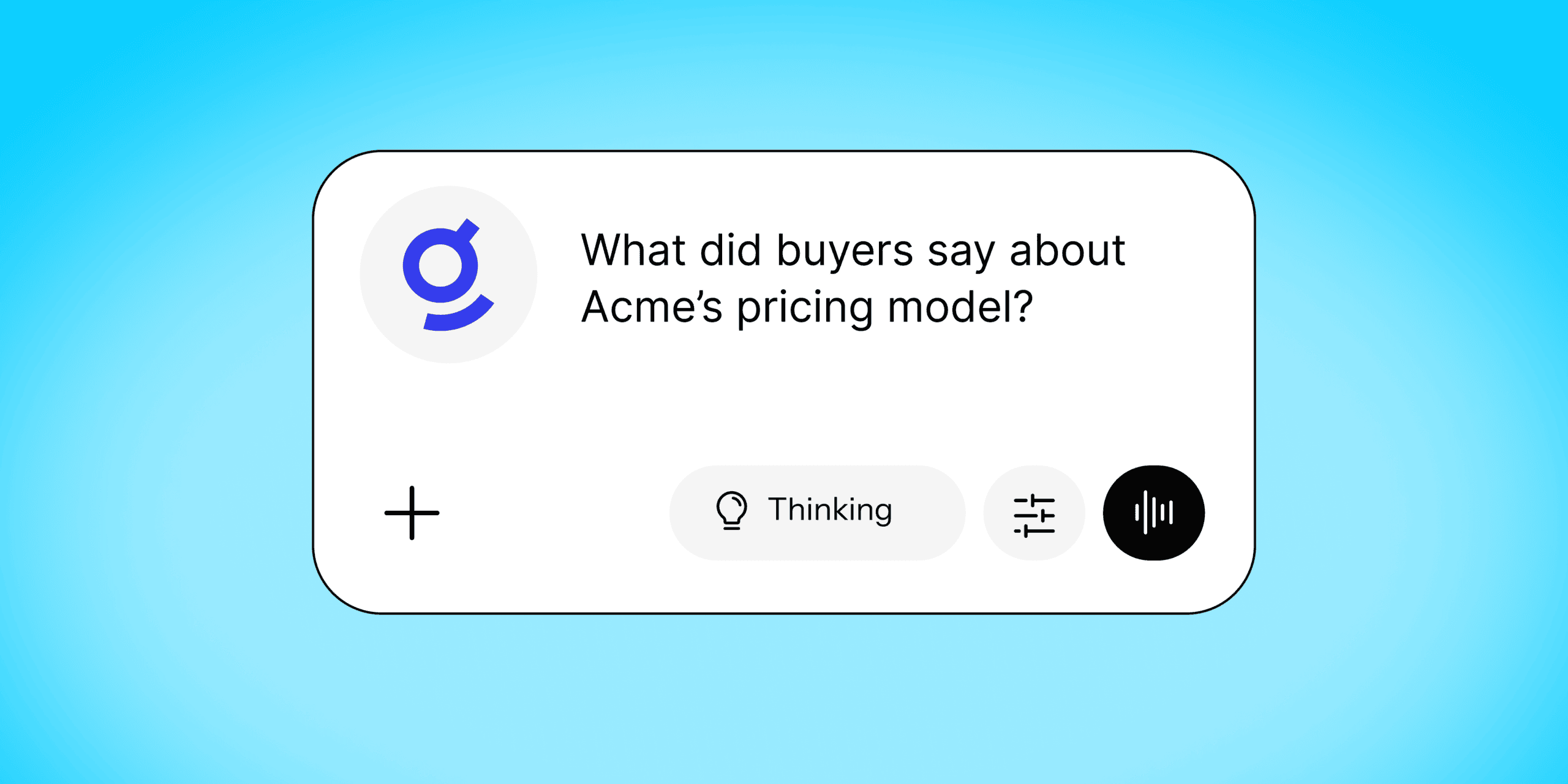
For real-time questions, sellers can ask for competitive intel in chat and get answers in seconds. Ask Klue functions as an instant competitive helpline accessible via Slack, Salesforce, or the Klue app. A seller types “what’s our response to Competitor X’s new pricing?” and gets the answer immediately.
How win-loss analysis feeds better battlecard content
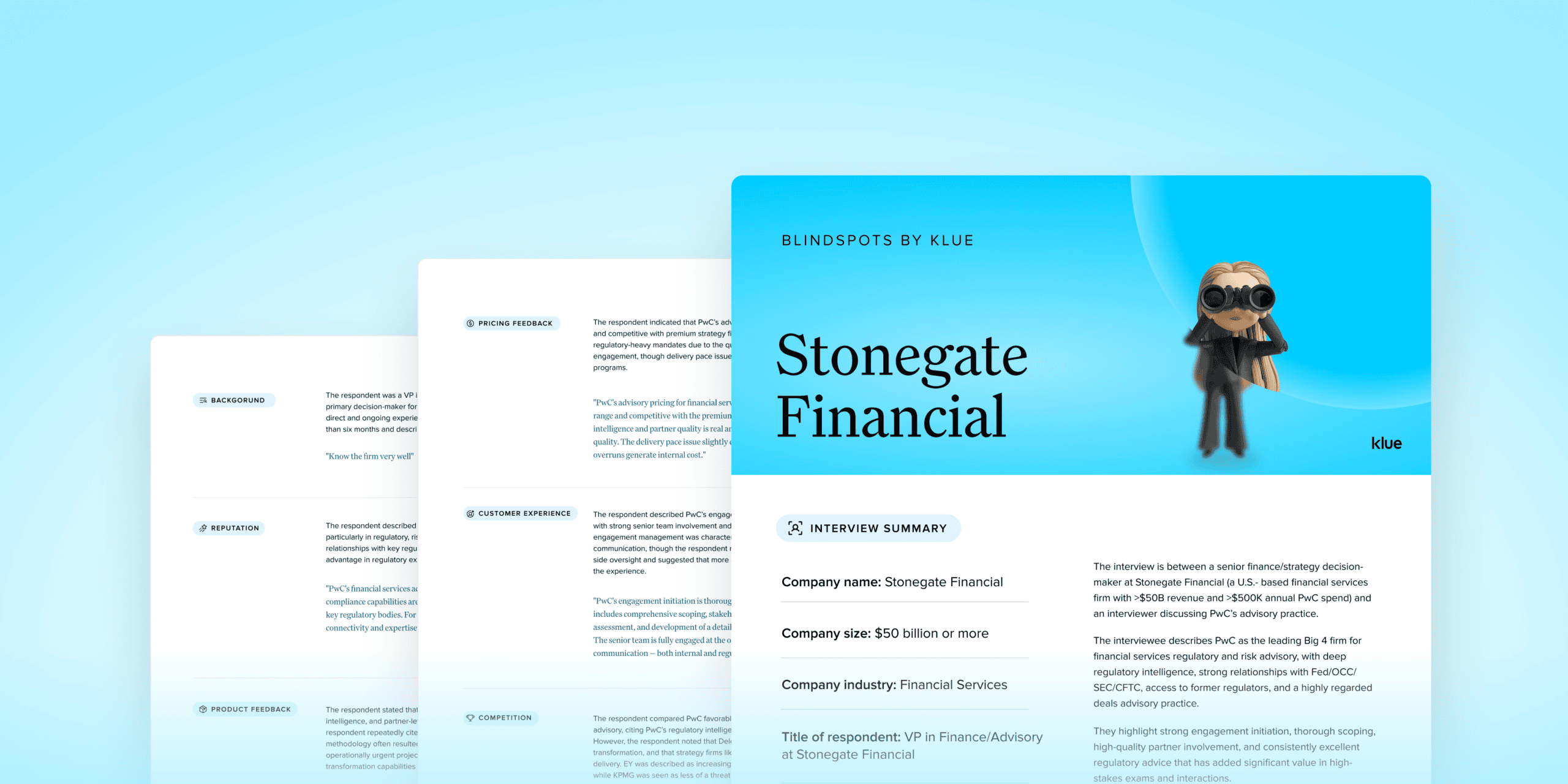
The best objection handlers and proof points come from actual buyer feedback, not internal assumptions. Win-loss interviews reveal why you win or lose against specific competitors, straight from the buyer’s perspective. This is intelligence your competitors can’t access because it’s based on your deals, not public information.
Klue Win-Loss captures objective buyer feedback and surfaces it directly into battlecard content. When a buyer explains exactly why they chose you over Competitor X, that quote becomes your most powerful proof point.
The feedback loop works in three directions:
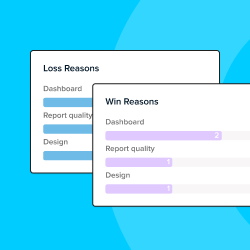
- Why you won: What messaging resonated, what proof points mattered, what the competitor got wrong
- Why you lost: What objections weren’t handled, what competitor claims landed, where your positioning fell flat
- Buyer perception: How the market actually sees each competitor, not how they position themselves
This is the difference between battlecards built on opinion and battlecards built on evidence.
Build a competitive enablement program that wins more deals
The question isn’t whether to automate your battlecards. It’s whether your sellers are getting the right competitive insight before the deal slips away.
Next time you’re evaluating your enablement approach, try flipping the frame: What does each live deal need to move forward right now? What signals tell us a competitor just entered the conversation? How do we deliver the insight before the rep even asks?
Proactive beats reactive. Every time.
Request a demo to see how Klue delivers automated battlecards that keep your sales team always competitive.
FAQs about automated battlecards
How long does it take to implement automated battlecards?
Implementation time depends on your existing data sources and how centralized your competitive intel already is. Most teams launch initial automated battlecards within a few weeks if CRM and call recording integrations are already in place. The longer timeline is usually data cleanup, not platform configuration.
How do I measure whether automated battlecards improve sales win rates?
Track battlecard usage alongside deal outcomes in your CRM. Compare win rates on competitive deals where sellers accessed battlecard content versus deals where they did not. The delta tells you whether the content is actually influencing outcomes or just sitting unused.
Can automated battlecards cover competitors my team has not profiled yet?
Yes. AI-powered platforms can generate initial competitor profiles from public data even if you’ve never formally tracked that rival. With Klue’s Competitor Profiles, you can input any competitor name and instantly generate a detailed profile that refreshes every 24 hours.
How do I maintain quality control with AI-generated battlecard content?
Set up a review workflow where PMM or CI approves AI-generated content before it goes live to sellers. Most platforms allow you to customize prompts, set approval gates, and flag content for human review. Automation handles the gathering. You handle the judgment calls.


SHARE THIS POST