














“We need a competitive intelligence tool.”
That’s what most teams say when deals start slipping to rivals. What they actually need is intel that reaches sellers before the call, not a repository of battlecards that nobody opens.
This guide breaks down the best competitive intelligence platforms for enterprise teams, what separates tools that get used from tools that get forgotten, and how to choose the right one for your sales motion.
Why most competitive intelligence tools fail enterprise teams
The top competitive intelligence platforms in 2026 include Klue for sales-focused battlecards and win-loss analysis, Semrush for SEO and digital intelligence, and AlphaSense for financial research. But here’s what the category lists won’t tell you: most CI tools collect data that never reaches the people who actually need it.
“We have a competitive intelligence tool.”
That’s what most enterprise teams say. What they mean is they have a repository of battlecards that sales reps open once a quarter, if at all. The problem isn’t a lack of information. It’s a delivery problem.
Intel sits in decks, wikis, and dashboards — only 29% of sales reps feel they have adequate information about competitors before walking into calls.
The shift happening now is from competitor-first to deal-first intelligence. Competitor-first tools track what rivals are doing. Deal-first tools deliver what your seller needs to win the specific opportunity in front of them, right when they need it.
What to look for in a competitive intelligence platform
Choosing a CI platform isn’t about finding the one with the most features. It’s about finding the one that actually changes seller behavior.
Here’s what separates tools that get used from tools that get forgotten:
- Automated data collection: The platform pulls from CRM data, sales calls, news, and competitor websites without manual work
- Deal-level delivery: Intel reaches sellers inside Salesforce, Slack, or email rather than sitting in a separate app
- Win-loss integration: Buyer feedback informs competitive positioning in the same system
- AI-powered research: The tool synthesizes insights and recommendations rather than just aggregating links
- CRM and revenue tool integrations: Salesforce, Gong, and Slack connections are table stakes for enterprise adoption
Automated data collection from internal and external sources
Monitoring tools track competitor websites for pricing changes and messaging updates. That’s useful, but it’s only half the picture.
The other half lives inside your organization: what buyers say on sales calls, what shows up in deal notes, what patterns emerge from closed-lost opportunities. These sources of competitive intelligence are often more valuable than external monitoring alone.
A platform that only watches external sources misses the signals that matter most.
Deal-level intelligence delivery
Competitive enablement is the practice of getting the right intel to the right seller at the right moment. The difference between reactive and proactive delivery is the difference between a rep searching for a battlecard mid-call and a rep receiving a briefing before the call even starts.
Proactive insights win deals — Forrester research found teams with competitive intelligence close deals 28% faster. Reactive assets catch up to losses.
Win-loss analysis capabilities
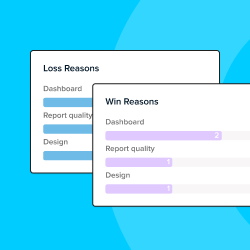
Win-loss analysis captures objective buyer feedback through interviews and surveys after deals close. It answers the question your CRM can’t: why did the buyer actually choose you, or your competitor?
When win-loss lives in a separate system from competitive intel, the insights stay siloed. Product teams see one version of reality. Sales sees another. The teams that win consistently connect both data sources in one place.
AI features for competitive research and recommendations
AI in competitive intelligence falls into two categories: generic and purpose-built.
Generic AI like ChatGPT can summarize public information about competitors. But it lacks your company context, can hallucinate details, and doesn’t connect to your CRM or call recordings. Purpose-built competitive AI synthesizes internal and external signals, then delivers recommendations tied to specific deals.
Integration with your existing sales and revenue tools
Adoption depends on meeting sellers where they work. If your CI platform requires reps to log into a separate app, usage will drop within weeks.
The critical integrations include Salesforce for deal context, Gong or similar tools for call intelligence, and Slack or Teams for real-time delivery. Without connections to your existing tech stack, you’re building another content graveyard.
Types of competitive intelligence software tools
The CI market includes several distinct categories. Understanding which type fits your primary use case prevents buying a tool optimized for the wrong problem.
| Tool Type | Best For | Examples |
|---|---|---|
| Competitive enablement platforms | Arming sales teams with deal-ready intel and battlecards | Klue, Kompyte |
| Win-loss analysis platforms | Understanding why you win and lose from buyer interviews | Klue Win-Loss, Primary Intelligence, Iceberg IQ |
| Discovery and monitoring tools | Tracking competitor website changes, news, job postings | Visualping |
| Sales enablement platforms | Content management and seller training | Highspot, Seismic |
| SEO and digital intelligence tools | Tracking competitor SEO, PPC, and content strategies | Semrush, Similarweb |
| Financial and market research platforms | Analyzing earnings calls, filings, and market trends | AlphaSense, CB Insights |
Competitive enablement platforms
Competitive enablement platforms combine collection, curation, and delivery. They’re built specifically to arm sellers with battlecards and deal-specific intel. Best for enterprise sales enablement and competitive battlecards.
Win-loss analysis platforms
Win-loss platforms capture buyer feedback through interviews and surveys. Some operate as standalone research services. Others integrate directly with competitive intelligence, connecting what buyers say to how you position against rivals.
Discovery and monitoring tools
Monitoring tools track competitor websites, news, and job postings. They’re strong for alerts but require manual synthesis to turn signals into seller-ready guidance.
Sales enablement platforms
Sales enablement platforms focus on content management with some competitive features. They’re not purpose-built for CI, though some have added battlecard capabilities through acquisition.
SEO and digital intelligence tools
SEO and digital intelligence tools are best for tracking online marketing strategies. Strong for digital metrics like traffic, keywords, and backlinks. Limited for sales enablement use cases.
Financial and market research platforms
Financial and market research platforms are best for strategic and investor-focused intelligence. Earnings calls, SEC filings, expert transcripts. More relevant for strategy teams than frontline sellers.
Best competitive intelligence platforms compared
Klue
Best for enterprise sales enablement and competitive battlecards. Klue combines competitive intelligence with win-loss analysis in one platform, which means buyer feedback directly informs how you position against rivals.
The platform delivers intel into Salesforce and Slack rather than requiring reps to log into a separate app. With Klue’s Deal Tips, sellers automatically receive personalized competitive briefings within minutes of a competitor being mentioned on a call.
Kompyte
Best for marketing teams and content-focused competitive analysis. Now part of Seismic. Strong battlecard features and website monitoring capabilities.
AlphaSense
Best for market and strategic intelligence. Specializes in financial documents, earnings calls, and expert transcripts. Better suited for investor relations and strategy teams than sales enablement.
Contify
Best for news monitoring and curated intelligence feeds. Good for teams that need broad market coverage across many competitors and industries.
Similarweb
Best for digital traffic and online competitive intelligence. Strong for understanding competitor website performance, traffic sources, and audience overlap.
Semrush
Best for SEO and digital marketing intelligence. Tracks competitor keywords, backlinks, and PPC strategies. Not built for sales enablement.
How AI is changing competitive intelligence tools
AI for automated competitive research
AI can monitor, summarize, and synthesize competitive signals without manual work, cutting data-processing time by 45%. Instead of spending hours compiling updates, CI teams can focus on analysis and strategy.
Klue’s Compete Agent operates as an AI teammate that automates research and delivers deal-specific insights. It eliminates manual work while ensuring intel stays current.
AI for deal-specific recommendations
The bigger shift is proactive intelligence. AI that reads deal context from your CRM and call recordings, then pushes relevant intel to sellers before they ask.
This is the difference between a searchable database and an AI that tells your rep, “Here’s what you need to know about Competitor X for tomorrow’s call with Acme Corp.”
What generic AI gets wrong about competitive intelligence
ChatGPT can tell you what a competitor’s website says. It can’t tell you what buyers said about that competitor in last month’s win-loss interviews.
Generic AI lacks your company context. It doesn’t know your positioning, your differentiators, or your pricing. And it definitely doesn’t integrate with your CRM.
Why win-loss analysis belongs in your competitive intelligence stack
Buyer feedback is the most objective source of competitive intel you have. Your sellers have opinions about why deals close. Your buyers have facts.
When win-loss lives in a separate system, insights stay siloed. The patterns that emerge from buyer interviews, like which competitor objections actually matter, never reach the battlecards your sellers use.
Klue Win-Loss captures objective buyer feedback through interviews, surveys, and AI analysis, then connects those insights directly to your competitive positioning. You can analyze any competitor instantly with Klue’s Competitor Profiles, which refresh every 24 hours with the latest intel.
How to select the right competitive intelligence platform
Start with your primary use case. A tool optimized for SEO intelligence won’t help your sellers win against Competitor X.
- Map to your team: Who will use the platform daily? PMM, CI, sales, leadership?
- Evaluate integration requirements: Does the platform connect to your CRM and call recording tools?
- Assess AI capabilities: Does the platform synthesize insights or just aggregate data?
- Consider win-loss needs: Do you need buyer feedback in the same platform as competitive intel?
- Test adoption friction: Will sellers actually use the platform, or will it become another forgotten repository?
Tip: Before your next platform evaluation, ask vendors to show you exactly how intel reaches sellers during a live deal. If the answer involves “logging into the platform,” keep looking.
The question your competitive intelligence platform should answer
The best CI platform isn’t the one with the most data sources or the longest feature list. It’s the one that answers a single question for every seller, every day: what do I need to know to win the deal in front of me right now?
Next time you’re evaluating competitive intelligence tools, flip the frame. Don’t ask what the platform tracks. Ask what it delivers, to whom, and when.
Request a demo to see how Klue delivers deal-first competitive intelligence.
FAQs about competitive intelligence platforms
How much does a competitive intelligence platform typically cost?
Pricing varies widely based on features, users, and data sources. Enterprise platforms like Klue and Kompyte typically use custom pricing based on team size and requirements. Expect to discuss your specific needs with vendors rather than finding public pricing.
What is the difference between competitive intelligence and market intelligence?
Competitive intelligence focuses on specific competitors and their strategies, positioning, and tactics. Market intelligence covers broader industry trends, customer segments, and market dynamics. Many enterprise teams need both, which is why some platforms combine both capabilities.
How long does it take to implement a competitive intelligence platform?
Implementation timelines range from a few hours for initial setup to several weeks for full enterprise deployment with integrations and training. The biggest variable is usually integration complexity with your existing tech stack.
Can competitive intelligence platforms integrate with Salesforce and Gong?
Most enterprise CI platforms offer Salesforce and Gong integrations. Connections to CRM and call recording tools are critical for deal-level intelligence delivery. Check specific vendor capabilities for your full tech stack before committing.
How do you measure the ROI of a competitive intelligence platform?
Common metrics include competitive win rate, time saved on research, battlecard usage, and seller confidence scores from deal feedback. The most meaningful measure is whether your win rate against specific competitors improves after implementation.
What is competitive enablement?
Competitive enablement is the practice of delivering competitive intelligence directly to sellers in their workflow so they can win more deals against specific competitors. It’s the shift from static battlecards to proactive, deal-specific guidance.


SHARE THIS POST